Incident Management
The Best Free Status Page Tools
A status page is where you tell users what is broken, what you are doing about it, and what the service has looked like lately.
The four tools below are the ones we would look at for a small team that wants a free page, or an open source page it can run itself. Prices and project status below are from October 9, 2026.
1. Cronitor
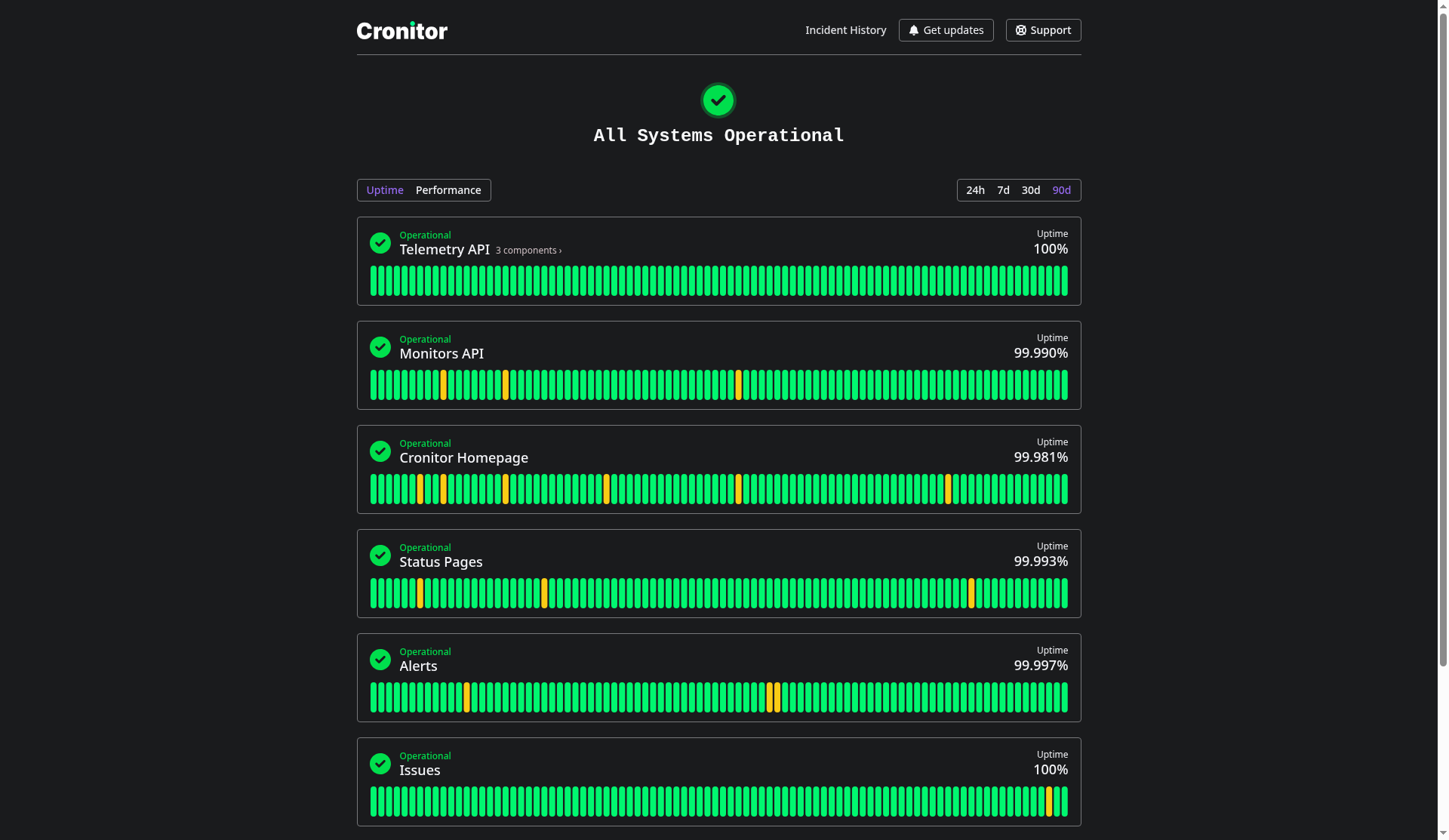
Cronitor status pages sit next to the monitors that feed them. You can watch websites, APIs, and cron jobs in the same account, and attach those monitors to the page as components.
The free Hacker plan, from the pricing page on October 9, 2026, includes 5 monitors, 1 dashboard user, and 1 basic status page with 50 subscribers. The Business plan is $2 per monitor per month plus $5 per dashboard user per month. On that plan a branded page (logo and custom domain) is $25 per month per page, and a private page (password or IP allowlist) is $50 per month per page. Business includes 500 subscribers.
Why pick Cronitor:
- The free plan includes a status page, uptime monitoring, real user monitoring, and cron job monitoring.
- Monitors can open and resolve incidents on the page. Turn that off per component if you want to publish by hand.
- A custom domain, logo, password, and IP allowlist are available as the paid add-ons above.
The status pages guide walks through the current screens. There is also a live demo.
2. Atlassian Statuspage
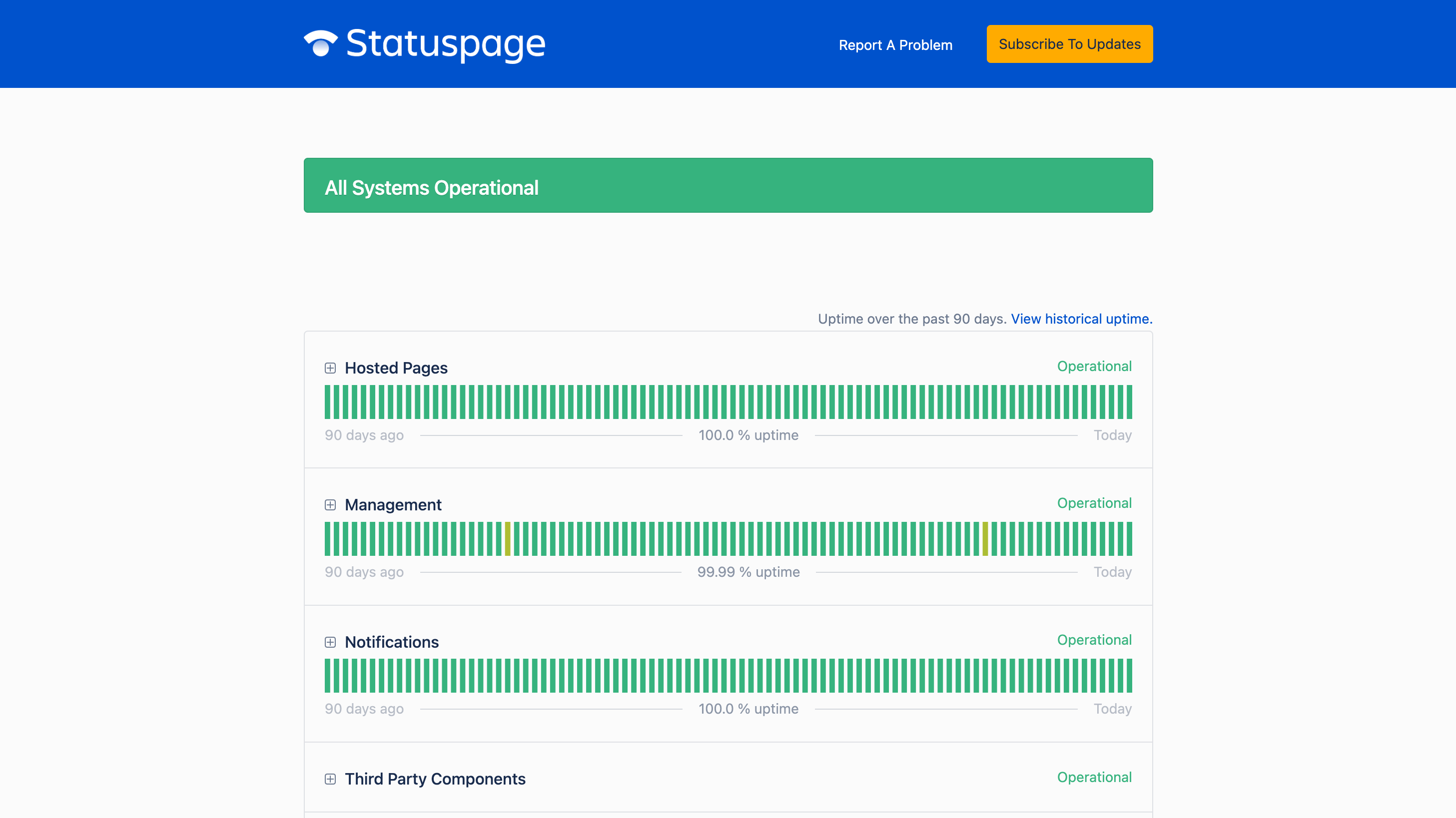
Atlassian Statuspage has a free public plan and a long paid ladder. On October 9, 2026 the pricing page listed the free plan as 100 subscribers, 25 components, 2 team members, and 2 metrics, with email, Slack, Microsoft Teams, and REST API access.
The free-plan support article lists the same subscriber, component, team, and metric limits. It says the free plan is public pages only, up to 2 pages per organization, with email and the REST API.
Paid public plans on the same pricing page were Hobby at $29 per month, Startup at $99, Business at $399, and Enterprise at $1,499. Hobby's card includes a custom domain and basic customization. The Enterprise card lists custom CSS, HTML, and JS.
Private pages are a separate price list on that page, starting with Starter at $79 per month. Audience-specific pages are priced separately too.
Why pick Atlassian Statuspage:
- You already run other Atlassian products and want the status page in that account.
- The free public plan is enough for a small page.
- You need a private page or an audience-specific page and can pay that separate list.
3. Instatus
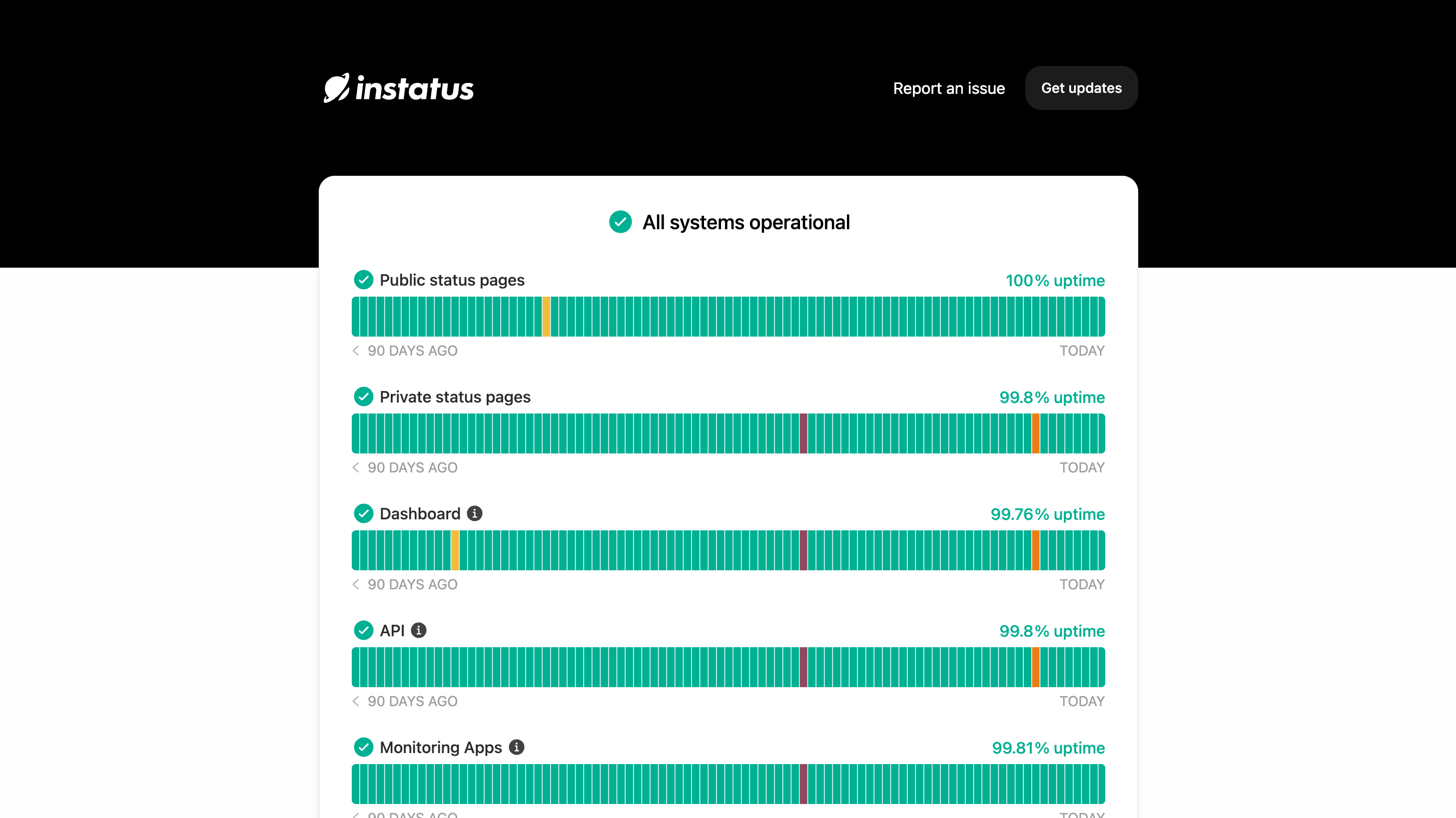
Instatus is a hosted status page with monitoring included. Their pricing markdown, read on October 9, 2026, lists:
- Starter, free: public page, 15 monitors, 5 team members, 200 subscribers, no custom domain.
- Pro, $20 per month ($15 per month billed yearly): custom domain, 50 monitors, 50 team members, 5,000 subscribers. A private variant is $50 per month, and a select-audience variant is $100 per month.
- Business, $300 per month: 1,000 monitors, 25,000 subscribers, SAML SSO, up to 3 pages.
- Enterprise: custom price.
Multi-language is listed on Pro and above. Custom code injection is listed on every plan, including Starter.
Why pick Instatus:
- You want a free public page that also runs monitors.
- Pro is a low monthly price if you need your own domain.
- You need more than one audience (public, private, or select) and will pay for that variant.
4. Vigil
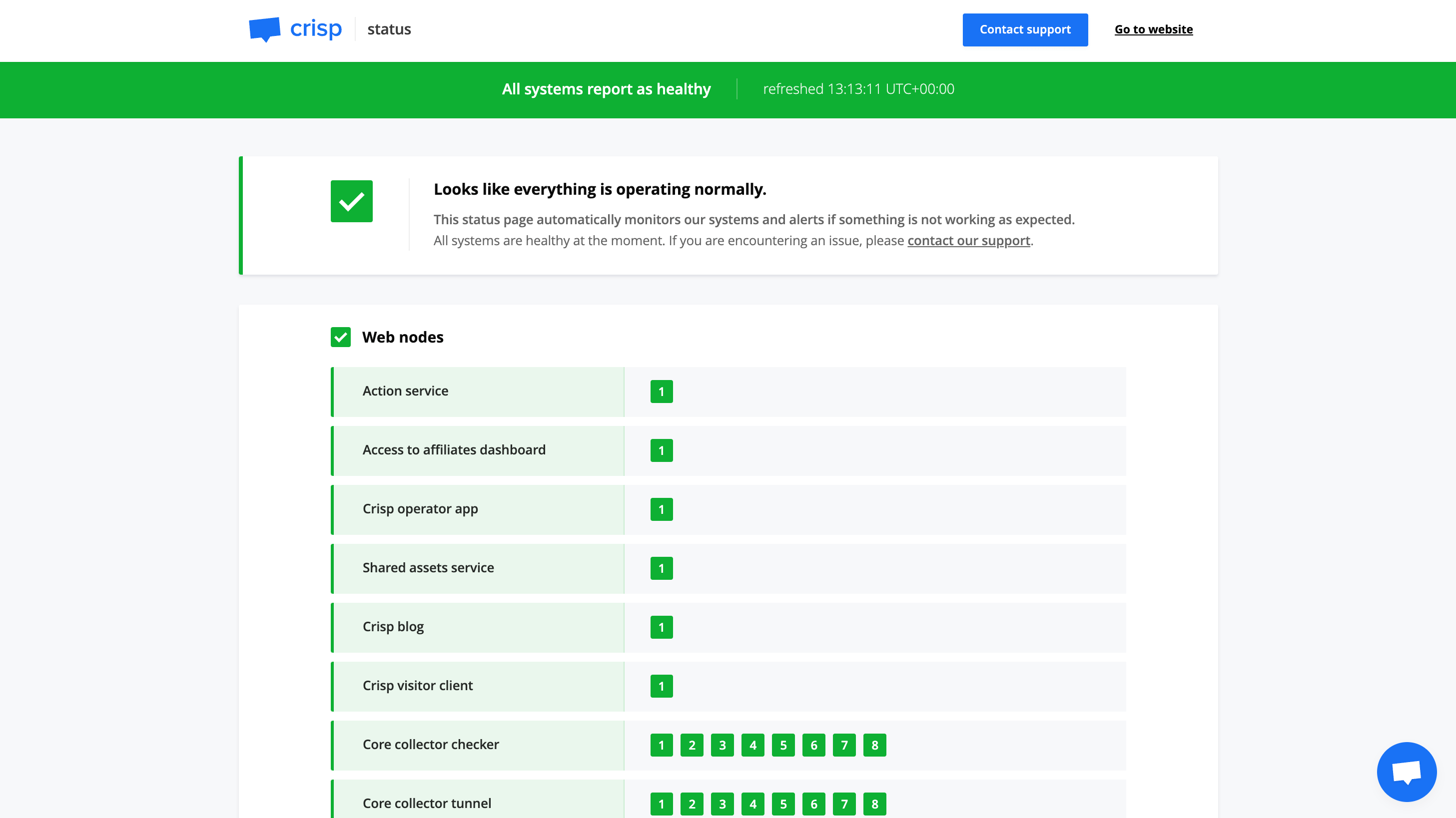
Vigil is an open source status page with its own uptime checks. You host it. That suits a team that wants the page on its own servers and is fine operating them.
The GitHub releases page shows a release published on March 26, 2026. The project is still maintained.
Three other open source status pages sit in the same category, and their status is different:
- Cachet 3.x is under active development. The project's own docs say it is not completely ready for production. The
cachethq/cachetandcachethq/corerepositories were both pushed on October 5, 2026. - Statusfy is archived. Its last push was June 12, 2022.
- Staytus is not archived. Its last push was January 19, 2023.
Self-hosting means you own the security patches. Read the repository before you put it in production.
Why pick Vigil:
- The code is open source, and a release shipped in March 2026.
- Uptime checks are part of the same program as the page.
- You were going to run the host yourself anyway.
Where to go from here
Cronitor and Instatus publish a free hosted plan with monitors attached. Atlassian Statuspage publishes a free public page and prices private pages apart from it. Vigil is the open source option that shipped a release in March 2026.
Status page examples shows how a few public pages are laid out, which is the useful next step once you have picked a tool.